By: Darryl Reilly
“I didn’t want to be a Hollywood actress who every so often does a play. I wanted to be a Broadway actress who every so often does a movie” said Geraldine Page about her notable career. This quote is from the stirring Bountiful: Growing Up with Geraldine Page: A Daughter’s Memoir written by Angelica Page who states in her preface:
This is not a biography, but a cross section of my own lush memories fused with all the bits of information I’ve gathered throughout my life on and around the subject. From outside sources and from the horse’s mouth. Mom was a great storyteller. My offering is simply my witnessing and that autoptic recounting to you, the reader. Honestly. Brutally. And without restraint.
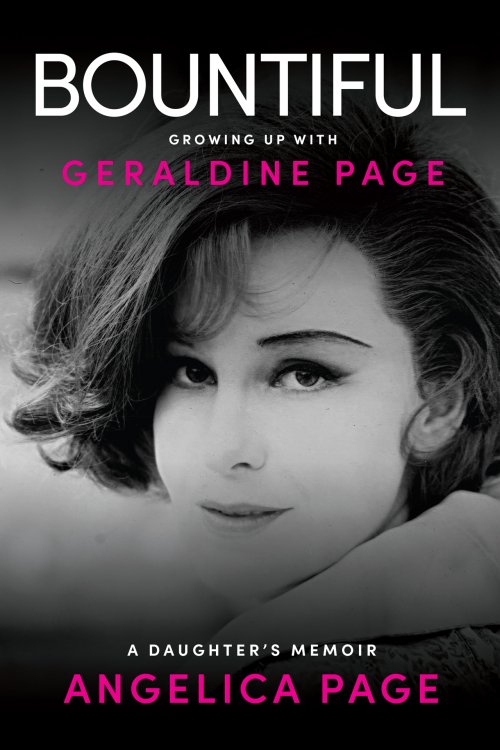
Indeed, Bountiful is not a conventional or definitive account, it is a swirling, affectionate, and stream of consciousness examination which should enchant admirers of the actress. Ms. Page alternates from nonlinear to chronological and her prose has a heightened dreamy tone. Page appears throughout the book observing and narrating while imparting facts. The book’s chief strengths are Page’s comprehensive research, personal insights, and striking revelations which are offered while chronicling the origin, ascent, and later life of one of the 20th century’s great performers. Such was the level of Geraldine Page’s fame and stature that in 1962 she was invited by President John F. Kennedy and First Lady Jacqueline Kennedy to their celebrated White House formal dinner in honor of French Minister of State for Cultural Affairs André Malraux and his wife, Madeleine Malraux.

This book grew out of the author’s frustration that over the decades since her mother’s death there has not been a biography or documentary about her, she attempted to oversee several such attempts with disappointing results. Geraldine Page had begun but abandoned a long ago memoir, and Angelica Page performs her self-written biographical solo stage show Turning Page where she plays her mother. Now finally, there is this passionate testament.
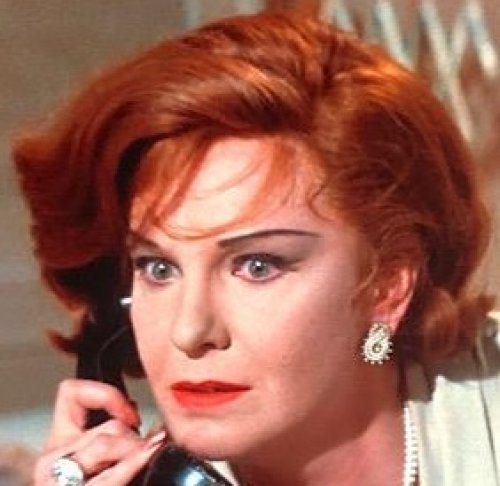
Oscar-winner Geraldine Page (1924-1987) also received two Emmys and was nominated four times for a Tony Award without winning which rankled her. She was a sincere eccentric known for her bohemian lifestyle. Offstage and off camera she was familiar for her humble attire and often wild hair. “The bag lady of the American Theater” was controversial critic John Simon’s typically biting assessment of her. The Academy of Motion Picture Arts and Sciences’ Actors Branch nominated her four times as Best Actress and four times for Best Supporting Actress over 32 years. Sometimes these nods were for her galvanizing turns despite little screentime. Such an example is her salty Irish American cigarette smoking battleaxe in The Pope of Greenwich Village (1984). Bountiful provides amusing backstory on this comically intense appearance.
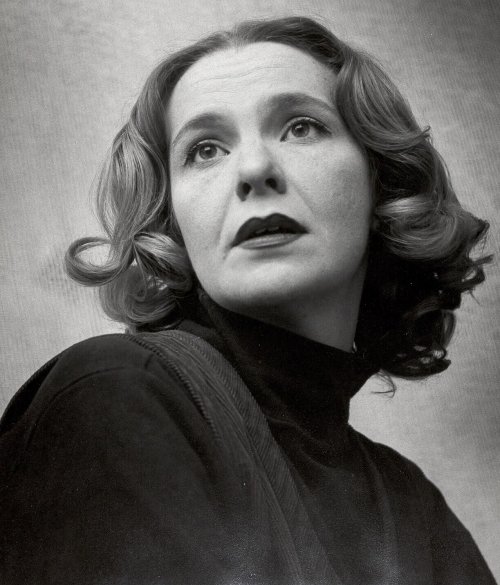
Her miraculous “overnight” stardom at the age of 27 in 1952 after seven years of poverty-stricken struggle is a legend striving thespians dream of. Chief drama critic of the New York Times Brooks Atkinson raved about her performance in an Off-Broadway revival of Tennessee Williams’ Summer and Smoke which had a disappointing Broadway run a few years earlier; she was suddenly now in the big time and observed:
Success is a frightening thing, particularly when it sends no messenger before its arrival. Imagine one day you are nothing and that by mid-night of the same day you are famous and one of the most sought-after women in the world. It’s quite a shock.
She then was on to Broadway and was soon off to Hollywood for her major screen debut. She tangled with and later befriended John Wayne while filming the 3D western Hondo for which she received her first Oscar nomination. Her daughter includes a brief take on Woody Allen’s family drama Interiors (1978). Page had a troubled time creating her indelible icy matriarch especially after being disappointed that it wasn’t a comedy. It is considered among her finest work and she was Oscar nominated.
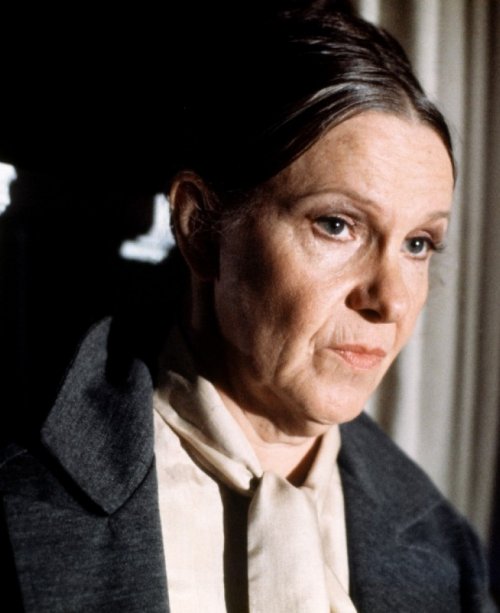
Geraldine Page was born in Missouri to supportive parents, during the Depression her family moved to the Chicago area for employment opportunities. She graduated from the Goodman School of Drama after three years of study while performing in an eclectic assortment of classic and contemporary productions. She and other graduates formed the Lake Zurich Playhouse which put on a variety of plays in summer. Page portrayed Regina Hubbard Giddens in Lillian Hellman’s The Little Foxes for the first time. It became a signature role; she performed it again and lastly on tour in 1976.
Angelica Page smoothly renders this history through immense detail and supports that Geraldine Page developed into a supreme actress because of her early extensive stage work. Angelica Page beautifully conjures the magical Manhattan of the 1940s and 1950s that her mother soldiered on in through glorious descriptive passages. Geraldine Page worked as a hatcheck girl at the fabled yesteryear restaurants Lindy’s and Luchow’s, oftentimes ate at Horn and Hardart’s nostalgic Automats, and had to frequently dodge the landlady of her Upper West Side drab warren due to late rent payments. Employment at a thread company was a later lifeline.
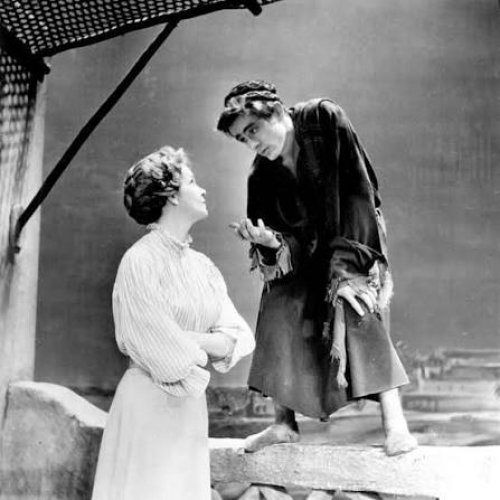
In 1955 while studying at the renowned Actors Studio with guru Lee Strasberg the established Page met the wild up and coming Texas-born actor Rip Torn (1931-2019), they later had an affair and married in 1963. Angelica was born in 1964 and her twin brothers the following year. Page and Torn’s union was tempestuous because of his heavy drinking, career insecurities, and infidelities. Page concealed her awards at home due to Torn’s envy. Near the end, Torn lived separately with his younger actress girlfriend and their child. However, the couple remained close and never divorced.
On the lighter side there are Manhattan real estate factoids. Torn and Page bought the five-story West 22nd Street brownstone which they had been renting an apartment in for $68,000. Her salary for the Walt Disney movie The Happiest Millionaire (1967) was crucial. This sprawling compound was known as Torn/Page. Chelsea was a rough neighbourhood in the 1960s and silverware was stolen from the residence, Missing spoons were later found; they were now crooked having been used to cook heroin.
Prior to Torn, Page was married for three rocky years to acclaimed violinist Alexander Schneider in the 1950s. A shocker in Bountiful is the previously undisclosed fact that Page had been widowed during her actual first marriage in the 1940s. It was to a young W.W. II veteran who aspired to be a stage director. He had mental issues because of a combat injury and eventually committed suicide. Angelica Page spellbindingly recounts the intrepid detective work she conducted to bring this to light and how this undoubtedly psychologically impacted her mother.
Bountiful is really two parts which cohere over 300 pages that are complemented by 40 gorgeous illustrative photographs. The solid first section is the absorbing tale of Geraldine Page’s inspiring hardscrabble emergence as a force in the entertainment industry. In the more freeform second portion she shares focus with Rip Torn and her daughter. We get references to Angelica’s attempts at ballet, her up and down acting career, a history of Method acting, interactions with Walt Disney, Truman Capote, the strung out nodding off Miles Davis, and The Sex Pistols during her spirited youth. There are wicked bits about Geraldine Page’s feuds with Herbert Berghof, Uta Hagen, and Ellen Burstyn. “My mother told me that she believed ‘95% of the people on this planet are absolute shits. Be pleasantly surprised if you come across a halfway decent person.’”
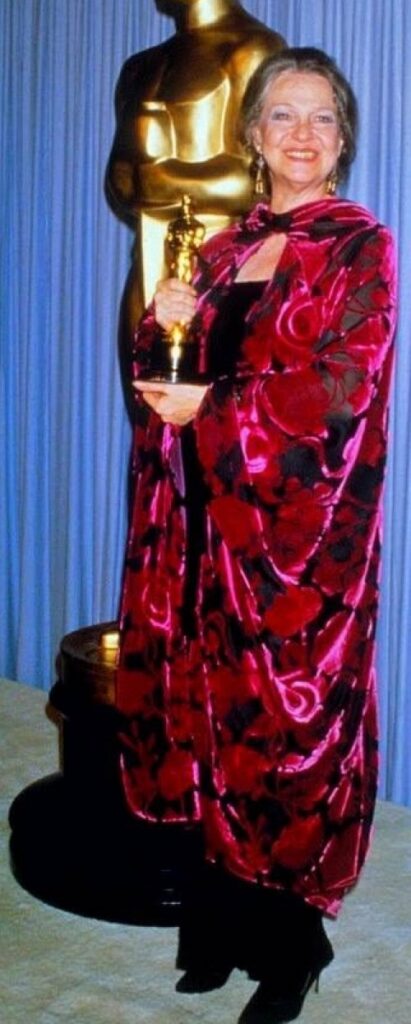
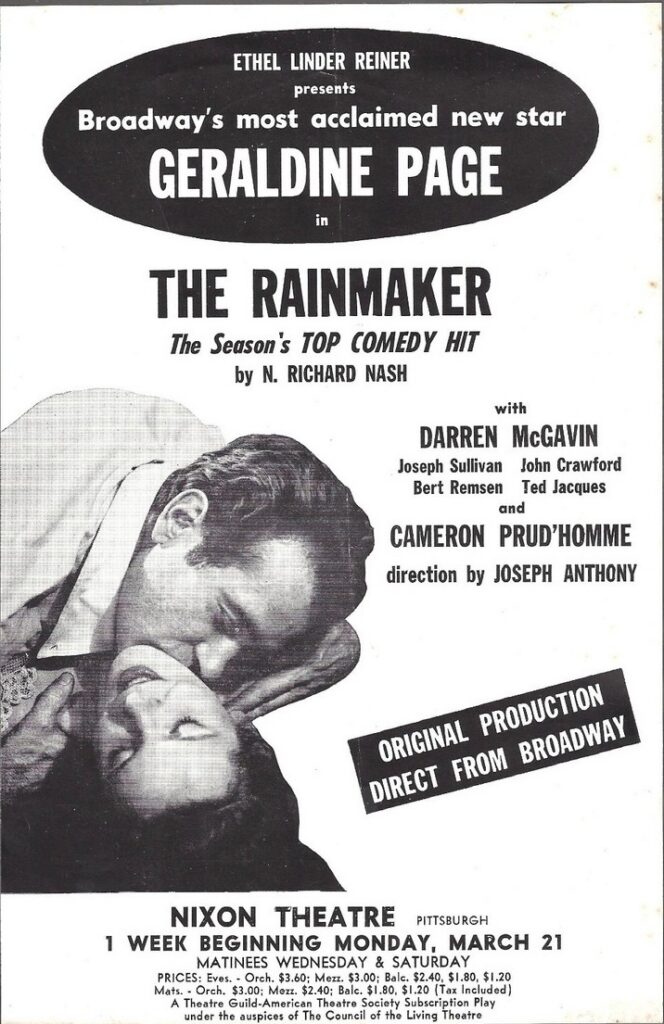
The final years of Geraldine Page’s relatively short life were eventful. She triumphed again on Broadway in 1982 as a feisty nun in the hit thriller Agnes of God. She taught acting for a nominal fee at a midtown Manhattan studio periodically taking her students out to a Theater District restaurant afterward and always picked up the check. She joined a new classical Off-Broadway theater company where she appeared in leading roles for $165 a week; money never really mattered to her, it really was about art for art’s sake. In 1986 there was at long last her Best Actress Oscar victory for The Trip to Bountiful.
Well Rip, the doctors say my heart is disintegrating. How do you think that happened?
In that era, her health rapidly declined due to having long taken a later proven to be detrimental high blood pressure medication which caused kidney failure, she required dialysis. “You will die if you do this play” declared her physician, still she accepted the choice role of Madame Arcati in the 1987 Broadway revival of Noël Coward’s Blithe Spirit for which she received her final Tony nomination. During its run, on June 13, 1987, she died at her home of a heart attack at the age of 62.
Bountiful: Growing Up with Geraldine Page: A Daughter’s Memoir succeeds as a revelatory portrait and for its poignant dynamic of a daughter’s eloquent reclaiming of her long-deceased mother.
My mother was a true iconoclast. Supremely unconventional and a committed non-conformist. She was also completely unpredictable. She could be the sweetest, most generous, and tender woman on the planet—but when hungry or exhausted she could be savage. And when she or a loved one was slighted in the least, her searing Scorpio side could immolate.
Bountiful: Growing Up with Geraldine Page: A Daughter’s Memoir
Published by Three Rooms Press
Hardcover $32 (302 pages)
To purchase, visit www.threeroomspress.com