By: Darryl Reilly
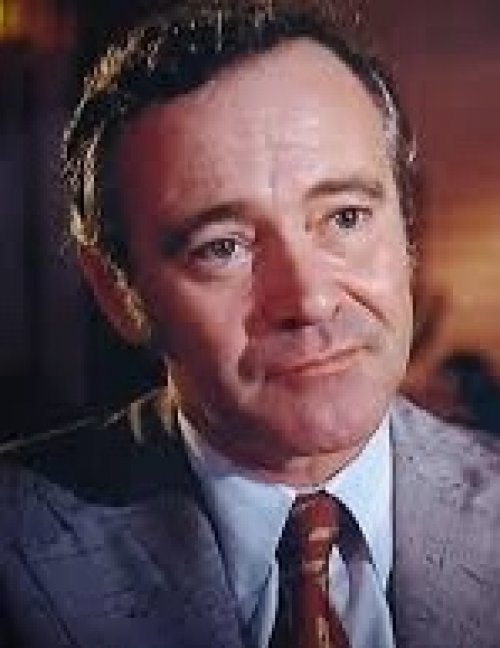
“Oh, Mr. Lemmon would you please pose for a picture?” asked a cheery middle-aged Midwestern woman. It was the summer of 1978 outside the stage door of the Brooks Atkinson Theatre following a Wednesday matinee of the play Tribute. Usually stars of Broadway shows do not come outside on matinee days in order to rest up for their evening performance. Jack Lemmon did not disappoint his gathering of fans.
He had just emerged into the alley looking freshly showered, wearing slacks, and a polo shirt. In one of his hands was a lit cigarette, in the other was a plastic cup of red wine. He gave a Jack Lemmon grin as he posed for the picture which the woman’s friend took. Then the first woman took a picture of her friend with Lemmon. Having finished his cigarette and his wine, Lemmon proceeded to sign every Playbill presented to him, all while smiling. When he signed mine I could see that he was exhausted. Of course he was, he had just delivered one of the greatest male stage performances of all time.
He had last been on Broadway in the 36-performance 1960 flop Face of a Hero. He was born in Massachusetts in 1925, graduated from Harvard, and came to New York City in 1949 to be an actor. His father was a bakery company executive who agreed to support him for a year. Lemmon studied with Uta Hagen and quickly got work in live television and then on Broadway. He was soon courted by Hollywood and won the Academy Award for Best Supporting Actor in 1955 for Mister Roberts. By 1978 he was one of the most lauded movie stars. Why did he come back to Broadway in a new play?
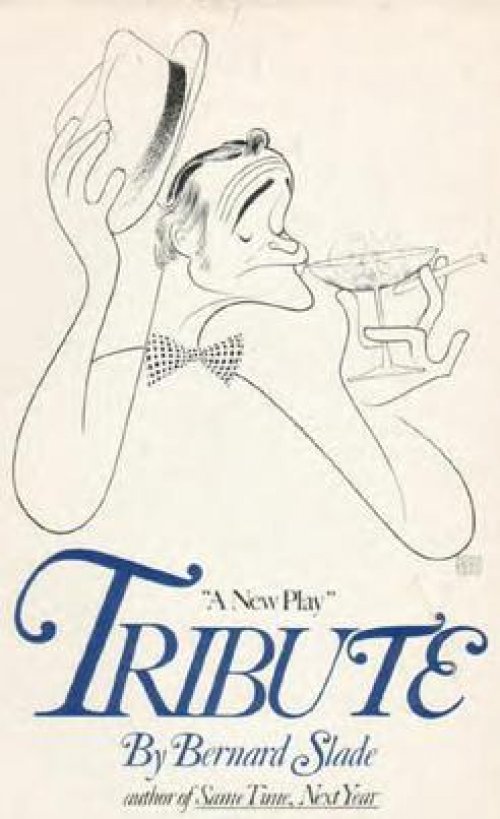
Tribute’s playwright Bernard Slade had a smash hit with his 1975 two-character Same Time, Next Year for which Ellen Burstyn had won the Tony Award for Best Actress in a Play. In 1980 Mr. Slade had a third hit with Romantic Comedy starring Mia Farrow and Anthony Perkins. None of these are works of great dramatic literature but were popular in their time. Slade was a prominent television writer who worked on Bewitched, developed The Flying Nun, and created The Partridge Family. He knew construction, snappy dialogue, and how to craft popular entertainment. Jack Lemmon was on his mind when he wrote Tribute, Slade sent an early draft to him and Lemmon agreed to do it. He knew a great part.
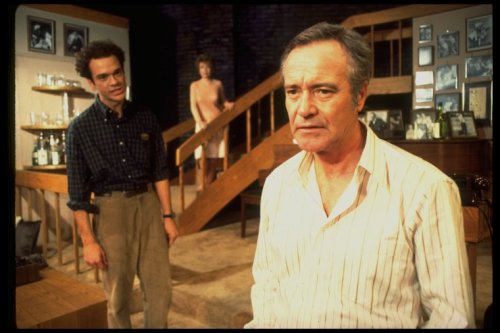
Scottie Templeton was a divorced once promising screenwriter and now a wisecracking Broadway press agent. Conflict occurs when his estranged son (beautifully played by Robert Picardo) comes to live with him. Other stock characters were Scottie’s agent best friend, his girlfriend, a prostitute, and a doctor.
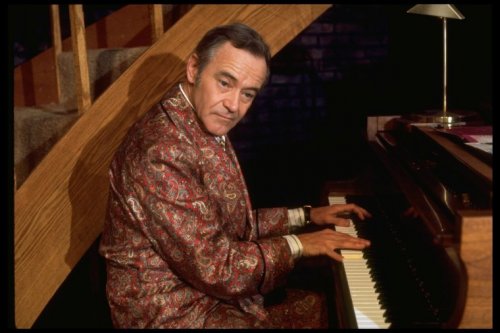
“I know I’m not the father you wanted. Did it ever occur to you that you’re not the son I wanted?” Lemmon’s icy delivery was chilling and indicative of his dramatic heft. That was intermingled with his ratatat delivery and frenetic physicality while smoking, drinking martinis, playing piano, and singing. He was ferocious as Scottie Templeton while being the recognizable Jack Lemmon. It was one of the greatest male stage performances in history.
Slade magnified the typical father son clash further with the device of having Scottie struck by leukemia. There was chemotherapy and reconciliation. Slade’s skill and Lemmon’s presence made the familiar material galvanizing. The play’s title comes from the son holding a celebration of Scottie’s life while he’s still around to witness it. A theatrical flourish was the audience seeing Lemmon seated in a theater box watching his tribute and then weakly coming up onstage. Father and son embrace as the curtain falls. This production was an event.
Directed by Arthur Storch Tribute opened June 1, 1978, having missed that year’s awards consideration cut-offs by a few weeks. In 1979 Lemmon was nominated for the Tony and Drama Desk awards as Leading Actor in a Play. By then the British Tom Conti was the toast of the town for Whose Life is it Anyway?, due to his awesome performance as a quadriplegic sculptor seeking to end his life, for which he won the Tony. The Drama Desk Award went to Philip Anglim for his commanding turn as the titular role in The Elephant Man.
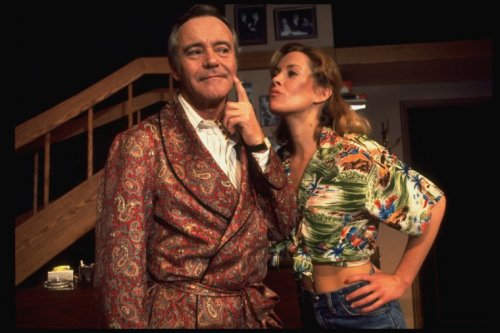
The New York Times’ chief drama critic at the time was the divisive Richard Eder who didn’t last long. Mr. Eder was dismissive of the play and mildly approving of Lemmon. I quote at length from David B. Edelstein’s Harvard Crimson review of the Boston tryout because it affirms my memories:
Throughout the evening, however, something very great is happening with Lemmon, and it’s not obvious, because he looks extremely relaxed onstage, devoid of mannerisms, economical in his gestures, and highly expressive in his voice. He’s playing a breezy juvenile again, with all that maturity and pained awareness forced under the surface, and though he does his damndest to keep the trembling from showing–until it all comes gushing out in the final scene–you can feel the subliminal tension beneath the happy-go-luckiness. I’ve never seen a Lemmon performance with an edge this sharp; when he is in control, it is very great acting…Tribute is a rich play, not brilliant but solid.
Tribute closed on December 2, 1978 after 212 performances following Lemmon’s six-month commitment. “I couldn’t follow Jack Lemmon in that!” said Tony Randall who was one of several famous actors who turned down replacing Lemmon. The 1980 film adaptation for which Lemmon was Oscar-nominated as Best Actor was directed by Bob (Porky’s and A Christmas Story) Clark. It was pedestrian and in the manner of an adequate 1970’s network television movie. Still, Lemmon and the cast of Lee Remick, Colleen Dewhurst, Robby Benson as the son, John Marley, and Kim Cattrall, all added their charms.
Jack Lemmon died 20 years ago today at the age of 76. Why am I moved to note this anniversary? For the same reason I was compelled to see Tribute onstage. Viewing 1973’s Save the Tiger as a child in a second-run Bronx movie theater made me a Lemmon admirer for life. There are two biographies of Lemmon, his son Chris performs a solo show about him, and Lemmon gave many lengthy interviews that are on YouTube. This commemoration focuses on his two historical triumphs.
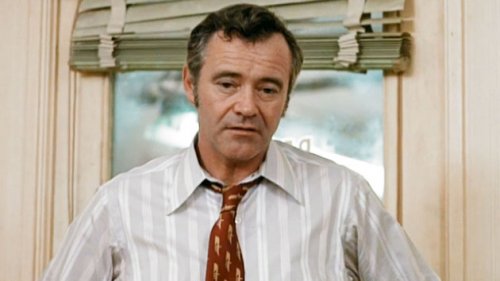
“Save the Tiger is essentially a virtuoso piece of movie acting. Jack Lemmon holds the movie together by the sheer force of his performance…” wrote Roger Ebert in his review. Lemmon struggled for years to get this low-budget grim passion project funded and it eventually got made with him taking union scale instead of his usual movie star fee. Over 36 hours we follow melancholy, middle-aged W.W. II veteran, and struggling Los Angeles garment manufacturer Harry Stoner in his quest to make it through another season during often unsavory vignettes.
Lemmon fearlessly tossed aside his ingratiating everyman persona to get to the harrowing core of a “Greatest Generation” member who has soured on The American Dream and is haunted by dead battle comrades. Whether arranging a prostitute for a garment buyer, conspiring to instigate arson in a porno theater, or getting high with a young female hippie, Lemmon is electrifying.
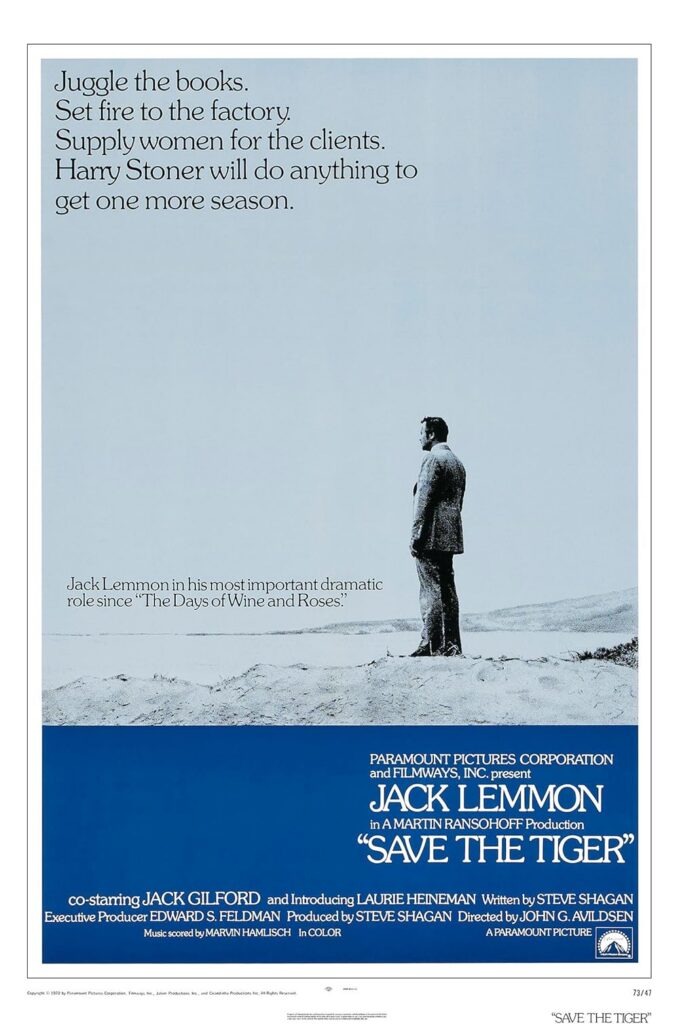
Screenwriter Steve Shagan’s searing script is in the “What’s it all about?” mode which was in vogue in the 1970’s. The opening sequence is like a one-act play as Stoner and his wife impart mundane details about their lives in their lavish Beverly Hills house. A highlight of future Rocky Oscar-winning director’s John G. Avildsen’s fluid and expressive direction is a breathtaking lengthy single shot tour of the garment factory. Dark events clash with the hazy California sun due to James Crabe’s virtuoso cinematography.
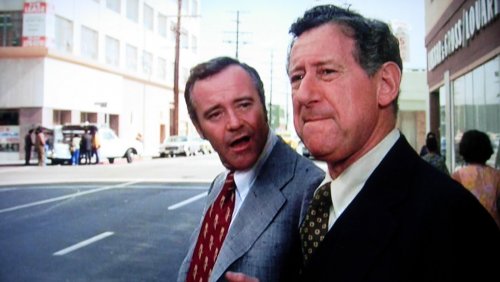
1973 was the year of The Sting, The Exorcist, and Live and Let Die, and other crowd pleasers. Save the Tiger failed at the box office but was nominated for Academy Awards for Shagan’s original screenplay, feisty Jack Gilford for Best Supporting Actor as Lemmon’s weary partner, and Lemmon as Best Actor. He received no precursor awards, but I was not surprised at the time that he won the Oscar anyway. It is one of the greatest male screen performances ever.