
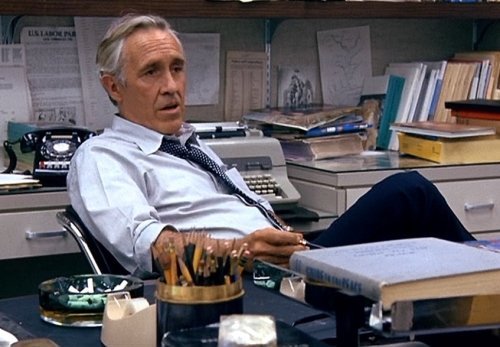
By: Darryl Reilly
“He was the last of a breed of actors who dedicated themselves to a life in the theater. Without asking for the role, he was our elder statesman” said Kevin Spacey at Jason Robards’ memorial tribute which was held at New York City’s Broadhurst Theatre on February 26, 2001.
“Jason, as good looking as he was and is, had a clown’s face. I believe that all great actors and actresses fundamentally have to be great clowns. Vulnerable, foolish painted faces disguising their capabilities to perform and feel every action and emotion known to man with a self-deprecating farcical gesture. And people laugh” opined José Quintero who directed Robards onstage many times in his 1974 memoir If You Don’t Dance They Beat You.
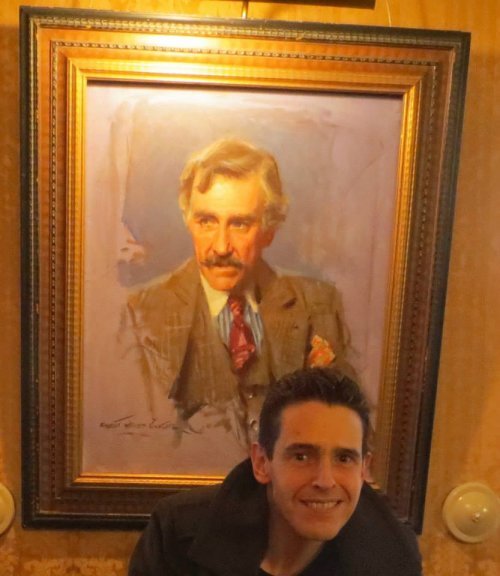
Seeing Jason Robards and Elaine Stritch in playwright A.R. Gurney’s Love Letters in the spring of 1989 at Off-Broadway’s Promenade Theatre was one of my most memorable theater experiences. At the start they were supposed to be upper class WASP children. They were then in their 60’s with their booming two-pack-a-day booze-seasoned voices and were so funny and moving.
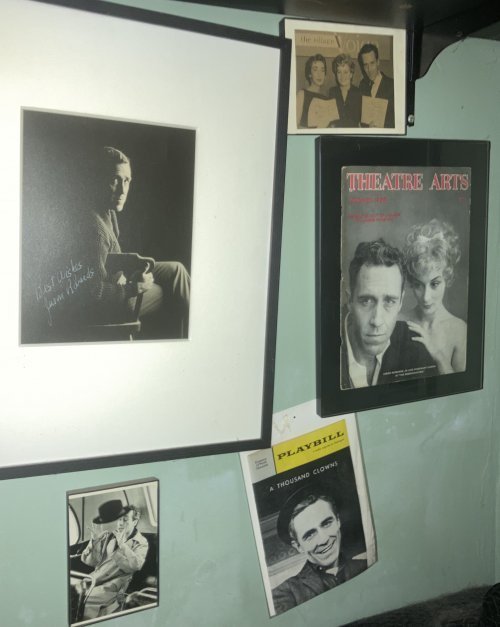
I saw Robards with a cigarette in hand walking on 52nd Street and 8th Avenue the year before. He was shorter than I thought, was wearing his customary safari jacket, and was glowering. No wonder, he was then in rehearsals for what would be a taxing Broadway repertoire commemorating Eugene O’Neill’s centennial. Co-starring Colleen Dewhurst in each, Long Day’s Journey into Night, was sluggish and the lighter Ah, Wilderness! was pleasant.
“When are you going to publish a definitive biography of Jason Robards?” I always asked an acquaintance who was an executive at a major performing arts book company who later got fired when we would encounter each other in the early 2000’s. “There’s no market for it” was his perpetual answer. I retorted “He was one of the great American actors! He led such a dramatic life!” “There’s not enough of an audience.” The Arts & Entertainment Network never did a televised biography of him nor did he appear on Inside the Actors Studio.
In 2002, two years after his death the Eugene O’Neill Society did publish the lovely slim trade paperback Jason Robards Remembered. It is a compilation of interviews with him and reminiscences by those who knew him. Jason Robards died 20 years ago today, December 26, 2000, of cancer at the age of 78. He’s been part of my consciousness for so long.
“Ben Bradlee is a winner and he’s only played losers” said skeptical director Alan J. Pakula in response to producer and actor Robert Redford’s casting suggestion of Robards as the Washington Post’s executive editor in the 1976 film All The President’s Men. Redford and Robards had worked together in Sidney Lumet’s 1960 television version of The Iceman Cometh. Redford persisted, Pakula met with Robards and he was eventually cast.
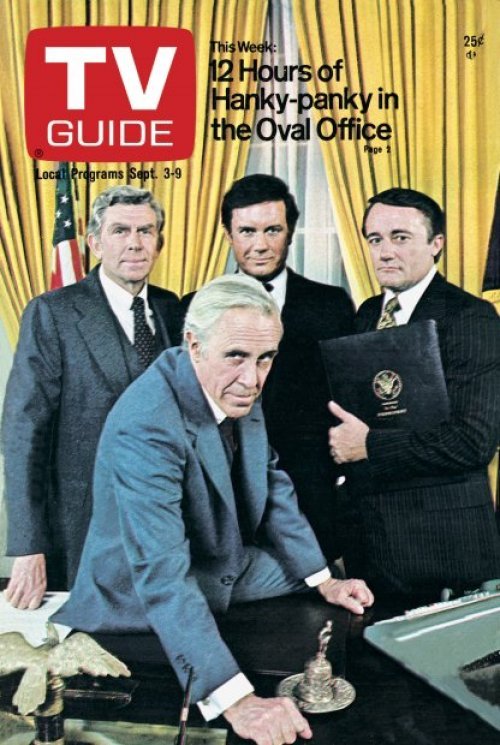
While watching All The President’s Men when it was first released, I was transfixed by Robards’ quietly commanding scenes with all of his distinctive flourishes. I had been aware of, but not that familiar with him. He won the Oscar for Best Supporting actor for it. That September there was his powerhouse Emmy-nominated performance as President Richard Monkton in the television mini-series Washington: Behind Closed Doors. In this Watergate roman à clef Robards played to the hilt the snarling, paranoid, and vindictive Richard Nixon figure. He was electrifying with his practiced precise ability to veer from bravura to introspection.
The combination of seeing that, All the President’s Men, and Julia, when impressionable in succession during Robards’ remarkable 1970’s renaissance is what instigated my life-long fascination with and adoration of him. There is so much evidence attesting to the fact that he was one of the United States’ and the world’s outstanding actors. Some years after that youthful inculcation when I was striving to be an actor he was often on my mind as an inspiration. A few times in the course of my multiple Off-Off-Broadway appearances I euphorically said to myself, “This is my Jason Robards part!”
“I thought you wanted to be a real writer. It’s good, it’s just not good enough” said Robards as Dashiell Hammett to Jane Fonda’s Lillian Hellman after reading the latest draft of her play The Children’s Hour, in Julia. In October of 1977 I took the subway from the Bronx and lined up to see it on opening day at Cinema I in Manhattan. It remains one of my favorite movies and this is arguably Robards’ finest screen performance. He so effortlessly conveys the weary Hammett’s complexities with his innate roguish charm along with his lived-in soulful countenance and that rumbling voice of his. It was all a marvel of confident simplicity. He wasn’t in attendance to accept his rarely given consecutive Oscar again for Best Supporting Actor. Bob Hope made a lame joke about him playing poker with George C. Scott and Marlon Brando.
That spring I saw him on stage for the first time in a revival of Eugene O’Neill’s A Touch of the Poet, this was why he wasn’t at that Oscar ceremony. From the rear mezzanine of the old Helen Hayes Theatre with its leaky roof there was Jason Robards in person! Clad in a 18th century military costume he roared his way through as a conniving Irish nobleman exiled to America where he now ran a tavern. He was ably supported by Kathryn Walker and Geraldine Fitzgerald as his feisty daughter and downtrodden wife and Milo O’Shea as comic relief. Robards received his eighth and final Tony Award nomination for it. As of now, he is the most nominated male performer for that prize.
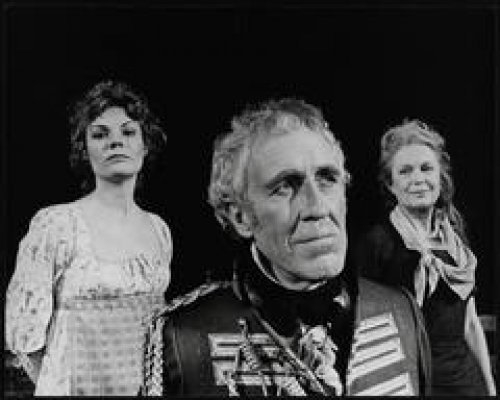
“I got one of those once,” groused Robards about his sole Tony win as Best Actor in a Play. It wasn’t for one of his titanic O’Neill characterizations but was in 1959 for The Disenchanted. He played an F. Scott Fitzgerald facsimile in this drama which ran for five months, co-starring Rosemary Harris and his father the faded character actor Jason Robards Sr.
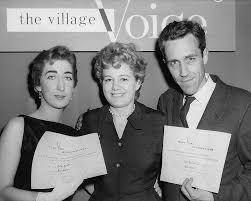
“Jason Robards Jr. plays Hickey the catalyst in the narrative like an evangelist…His heartiness, his aura of good fellowship gives the character a feeling of evil mischief it did not have 10 years ago” stated New York Times drama critic Brooks Atkinson in his rave review of the legendary 1956 Circle in the Square revival of The Iceman Cometh performed in Greenwich Village. After 10 years of struggle as an actor the Chicago-born, W.W. II veteran, and American Academy of Dramatic Arts graduate Robards won an Obie and became a star “overnight” at the age of 33. He was magnetic in the lackluster 1985 revival where Barnard Hughes stood out as bar owner Harry Hope.
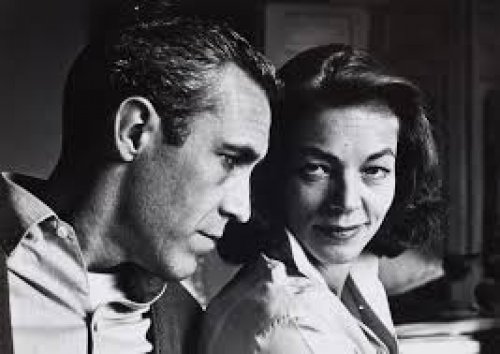
“He was quite dazzling—and a little crazy. A remarkable actor and unlike any I’d ever known…He was a pure theater man and considered by his peers to be a rarity—a great talent who brought something indefinable to every role…I loved Jason when he was the Jason I knew he could be, but the other Jason took over too often” wrote Lauren Bacall in her 1979 memoir Lauren Bacall By Myself. Their marriage lasted from 1961 to 1969 and produced a son Sam who became a Tony-nominated actor and ended because of Robards’ heavy drinking. He began seeing a psychiatrist in the early 1960’s.
“Damn it man, do you want the happy face or the sad face?!” he once exploded at an ineffectual director. In his collected letters published in 2004, John Gielgud who was directing him on Broadway in 1961’s Big Fish, Little Fish noted that Robards arrived hung over at a few rehearsals and wasn’t much use on those days. Elia Kazan in his 1988 memoir A: Life detailed their strained relationship while at the new, idealistic, and soon to fail Repertory Theatre of Lincoln Center. They were struggling to stage and perform Arthur Miller’s 1964 jumbled autobiographical fantasia After the Fall.:
Jason would grumble, openly or stare at the people out front with an expression on his face that said, more clearly than words, “Did you ever hear such shit?” Then he began to go further and bitch under his breath to the actors with whom he was playing with, whispering irrelevancies, carrying on far outside the play’s dialogue, so releasing his scorn of the play, its direction, and the theatre, of everything he felt trapped into and wished he’d never agreed to.
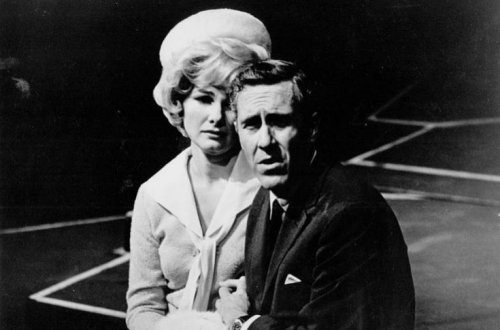
“I’ve been a drunk and I’ve run out on my family. I knew this guy but I was too old for it” Robards commented on the 1987 screen version of the novel Ironweed starring Jack Nicholson. He played the 1930’s tragic former Albany trolley worker Francis Phelan who became a homeless alcoholic. Robards narrated the 1986 audibook.
In December 1972 Robards nearly died when he drunkenly crashed his car in Los Angeles. He had recently learned that Lee Marvin had been cast in his signature role of Hickey in the film adaptation of The Iceman Cometh. He face had to be rebuilt through extensive reconstructive plastic surgery due to his horrendous injuries. He quit drinking in the aftermath and became active in raising awareness of alcoholism. A year after the accident he was back on Broadway with Colleen Dewhurst in the celebrated revival of A Moon for the Misbegotten. Critic John Simon wrote:
Jason Robards reappears after a long and trying interval, more lined and chastened, an older and finer actor. The easy reliance on charming mannerism is all but gone, and what remains is a soul ravaged into purity. It may be that his Tyrone is not so dilapidated as he should be, but his flagging recalcitrance and despairing gallantry are consummate and moving.
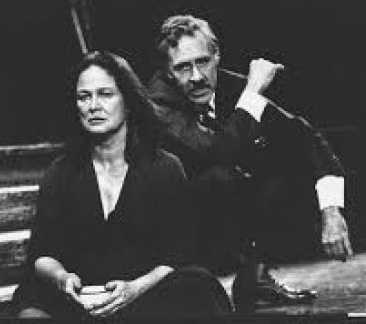
A third Oscar nomination came in 1980 for his zany Howard Hughes portrayal in Melvin and Howard where he rode a motorcycle and sang “Bye Bye Blackbird”. He achieved “The Triple Crown of Acting” (Oscar, Tony and Emmy) when upon his fifth nomination he won a 1988 Emmy Award for vividly playing the Clarence Darrow role in a television adaptation of Inherit the Wind opposite Kirk Douglas.
He was hilarious as a befuddled NYPD detective in Bill Murray’s 1990 comic caper movie Quick Change. 1993’s Philadelphia contained his sharply snide turn as Tom Hanks’ homophobic boss. His bit as an old-time drunken New Yorker-type writer was priceless in the 1988 film of the novel Bright Lights, Big City. His final screen role was in 1999’s Magnolia as Tom Cruise’s dying father.
“The land of the living dead” was his crack about Hollywood. Hot in the industry off of his Oscar wins it was an amusing thrill to watch him professionally go through the motions in such subsequent paycheck duds as Hurricane, Cabo Blanco, Raise the Titanic and The Legend of the Lone Ranger as Ulysses S. Grant. These enabled him to live in a fine Connecticut house with his fourth wife of 30 years Lois O’Connor and their two children.
The Christmas Wife is a 1988 HBO movie that I had fond memories of. While writing this piece I came across it on YouTube and watched it again after many years. This is mostly a small-scale two-character work harkening back to television’s Golden Age. Here Robards has a rare and majestic leading role during his latter career and it’s a grand summation of his talents. He plays a recent widowed retired architect who has a poignant and complex involvement with the equally towering Julie Harris.
The Roundabout Theatre Company’s 1994 revival of Harold Pinter’s No Man’s Land was the last of his 20 Broadway appearances. In the “Ralph Richardson” role with his idiosyncratic simulation of an English accent he was quite credible and mesmerizing. In the “John Gielgud” part was his close friend Christopher Plummer who as usual stole the show, the notices, and got a Tony nomination. At the Roundabout’s Off-Broadway venue Robards made his final New York City stage appearances; in Pinter’s Moonlight in 1995 and the next year in Brian Friel’s Molly Sweeny. After his death the Roundabout instituted their annual “Jason Robards Award for Excellence in Theatre” which was most recently presented to John Lithgow.
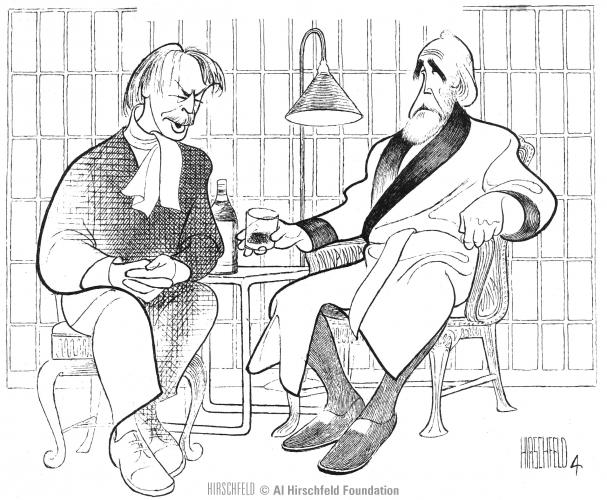
In the absence of that never commissioned definitive biography of Jason Robards there is Christopher Plummer’s beautiful portait of his comrade imparted throughout Mr. Plummer’s sprawling and delightful 2008 memoir In Spite of Myself. “Jason’s was the best Hotspur I’ve ever seen…” he declared of one of Robards’ only two Shakespearean performances. Those were in the summer of 1958 in Henry IV, Part 1 and as Polixenes in The Winter’s Tale both performed at Ontario, Canada’s Stratford Festival. Plummer met Robards during Manhattan’s bustling and heady 1950’s theater scene: